Hello, Sign in
My Account
My Account
New customer? Start here
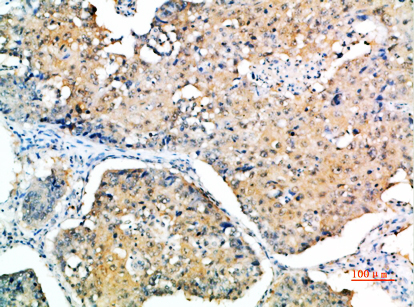
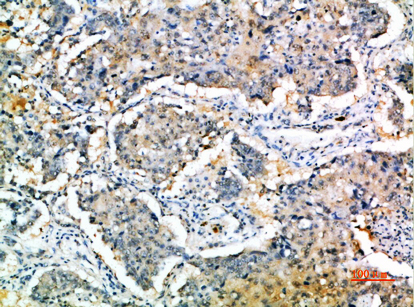


| Catalog # | Availability | Size | Quantity | Unit Price | Save For Later Wish List | |
|---|---|---|---|---|---|---|
| ABZ1588-100 | 2 weeks | 100 µL | $499.00 |
Select product before adding to cart
|
||
| ABZ1588-20 | 2 weeks | 20 µL | $149.00 |
Product Overview | |
| Name | SOCS3 Rabbit pAb |
|---|---|
| Accession (Primary) | O14543 |
| Host Species | Rabbit |
| Clonality | Polyclonal |
| Isotype | IgG |
| Species Reactivity | |
| Reacts With | Human, Mouse, Rat |
| Buffer System | |
| Liquid in PBS containing 50% glycerol, 0.5% BSA and 0.02% sodium azide, pH 7.3. | |
| Storage | |
| Store at 4°C short term. Aliquot and store at -20°C long term. Avoid freeze/thaw cycles. | |
| Recommended Dilution | |
| WB-1:500-1:2000; IHC:1:50-1:300; IF-1:50-1:200 | |
| Purification | |
| Affinity Purified | |
| Conjugation | |
| Unconjugated | |
| Modification | |
| Unmodified | |
| Form | |
| Liquid | |
| Background | |
| SOCS family proteins form part of a classical negative feedback system that regulates cytokine signal transduction. SOCS3 is involved in negative regulation of cytokines that signal through the JAK/STAT pathway. Inhibits cytokine signal transduction by binding to tyrosine kinase receptors including gp130, LIF, erythropoietin, insulin, IL12, GCSF and leptin receptors. Binding to JAK2 inhibits its kinase activity. Suppresses fetal liver erythropoiesis. Regulates onset and maintenance of allergic responses mediated by T-helper type 2 cells. Regulates IL-6 signaling in vivo (By similarity). Probable substrate recognition component of a SCF-like ECS (Elongin BC-CUL2/5-SOCS-box protein) E3 ubiquitin-protein ligase complex which mediates the ubiquitination and subsequent proteasomal degradation of target proteins. Seems to recognize IL6ST. | |
Target Information: ( O14543 ) | |
| Name | SOCS3 |
| Gene ID | 9021 |
| Other Names | |
| SOCS3; CIS3; SSI3; SSI-3; Suppressor of cytokine signaling 3; SOCS-3; Cytokine-inducible SH2 protein 3; CIS-3; STAT-induced STAT inhibitor 3; SSI-3; ATOD4 | |

Thousands of laboratories across the world have published research that depended on the performance of antibodies from ADMEbio to advance their research.
Check out links to articles that cite our products in major peer-reviewed journals, organized by research category.
Thank you,
ADMEbio Team

ADMEbio welcomes feedback from our customers.
Thank you,
ADMEbio Team