
Hello, Sign in
My Account
My Account
New customer? Start here


| Catalog # | Availability | Size | Quantity | Unit Price | Save For Later Wish List | |
|---|---|---|---|---|---|---|
| ABG1958-100 | 3 days | 100 µL | $499.00 |
Select product before adding to cart
|
||
| ABG1958-20 | 3 days | 20 µL | $149.00 |
Product Overview | |
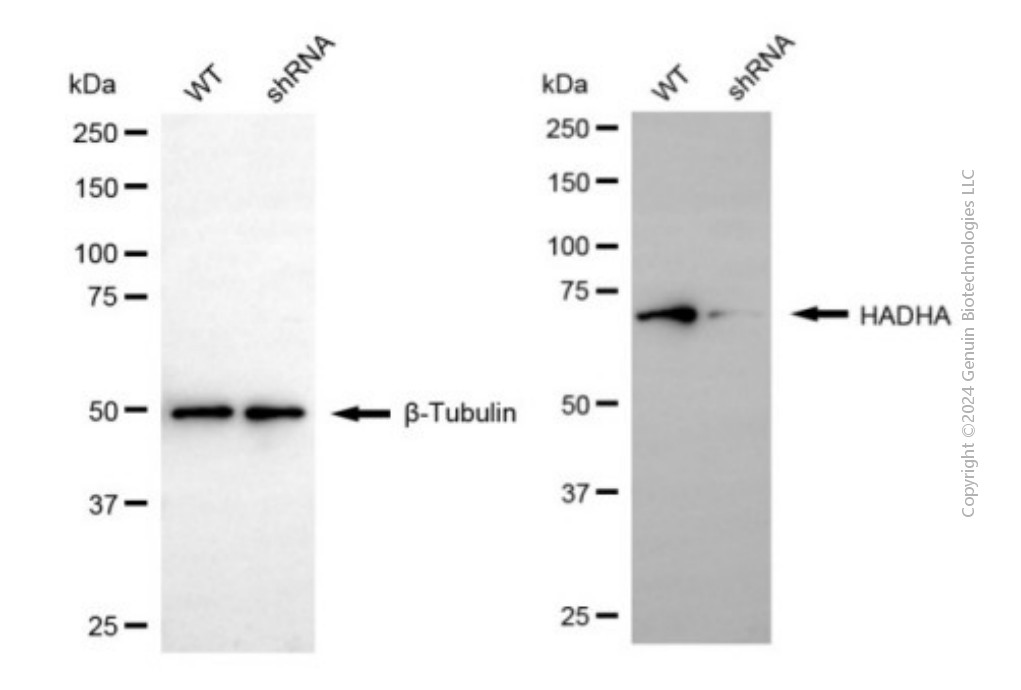
| Name | KD-Validated Anti-HADHA Mouse Monoclonal Antibody |
|---|---|
| Accession (Primary) | P40939 |
| Host Species | Mouse |
| Clonality | Monoclonal |
| Isotype | Mouse IgG1 |
| Clone Names | 24GB6655 |
| Immunogen | |
| Recombinant protein of human HADHA | |
| Species Reactivity | |
| Reacts With | Human, Mouse, Rat |
| Calculated MW | |
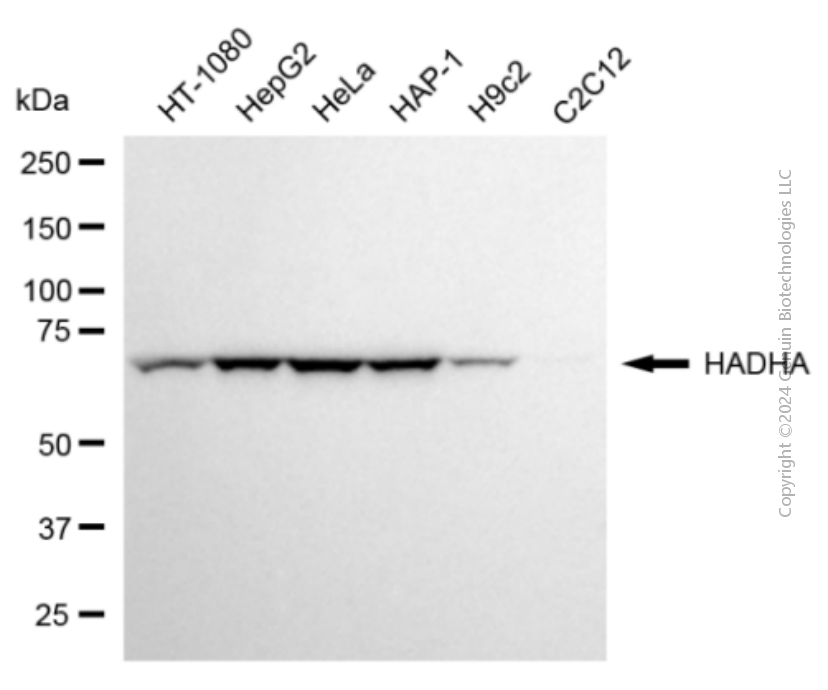
| Predicted, 83 kDa, observed, 73 kDa | |
| Storage Buffer | |
| Supplied in PBS (pH 7.4) containing 50% glycerol, and 0.02% sodium azide. | |
| Recommended Dilution | |
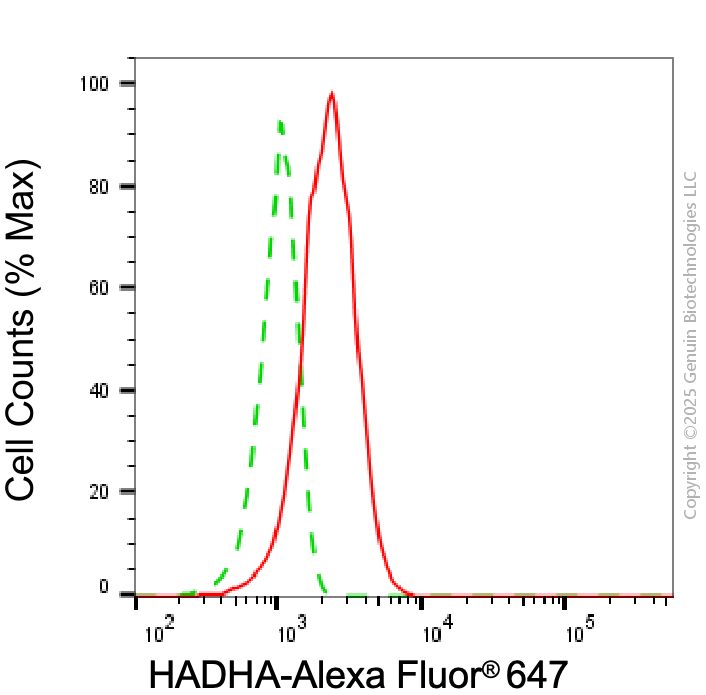
| Western Blotting (WB): 1:1,000-1:2,500 Flow cytometry (FCM): 1:2,000 | |
Target Information: ( P40939 ) | |
| Gene Name | HADHA |
| Other Gene Names | |
| HADHA; Hydroxyacyl-CoA Dehydrogenase Trifunctional Multienzyme Complex Subunit Alpha; LCHAD; LCEH; MTPA; GBP; Hydroxyacyl-Coenzyme A Dehydrogenase/3-Ketoacyl-Coenzyme A Thiolase/Enoyl-Coenzyme A HydRatase (Trifunctional Protein), Alpha Subunit; Hydroxyacyl-CoA Dehydrogenase/3-Ketoacyl-CoA Thiolase/Enoyl-CoA HydRatase (Trifunctional Protein), Alpha Subunit; Mitochondrial Trifunctional Protein, Alpha Subunit; Trifunctional Enzyme Subunit Alpha, Mitochondrial; Long-Chain-3-Hydroxyacyl-CoA Dehydrogenase; Monolysocardiolipin Acyltransferase; Long-Chain 2-Enoyl-CoA HydRatase; 78 KDa Gastrin-Binding Protein; Gastrin-Binding Protein; HADH; Mitochondrial Long-Chain L-3-Hydroxyacyl-Coenzyme A (CoA) Dehydrogenase, Alpha Subunit; Mitochondrial Long-Chain 2-Enoyl-Coenzyme A (CoA) HydRatase, Alpha Subunit; 3-Ketoacyl-Coenzyme A (CoA) Thiolase, Alpha Subunit; Mitochondrial Trifunctional Enzyme, Alpha Subunit; 3-Oxoacyl-CoA Thiolase; EC 2.3.1.- ; TP-ALPHA; TP-Alpha; ECHA | |
| About Gene Symbol | |
| HADHA is a mitochondrial acyltransferase enzyme involved in cellular metabolism. It is an important research target in metabolic disease, cancer metabolism, and drug discovery and is widely studied to elucidate cellular mechanisms and identify therapeutic | |

Thousands of laboratories across the world have published research that depended on the performance of antibodies from ADMEbio to advance their research.
Check out links to articles that cite our products in major peer-reviewed journals, organized by research category.
Thank you,
ADMEbio Team


ADMEbio welcomes feedback from our customers.
Thank you,
ADMEbio Team



