
Hello, Sign in
My Account
My Account
New customer? Start here


| Catalog # | Availability | Size | Quantity | Unit Price | Save For Later Wish List | |
|---|---|---|---|---|---|---|
| ABZ3847-100 | 2 weeks | 100 µL | $499.00 |
Select product before adding to cart
|
||
| ABZ3847-20 | 2 weeks | 20 µL | $149.00 |
Product Overview | |
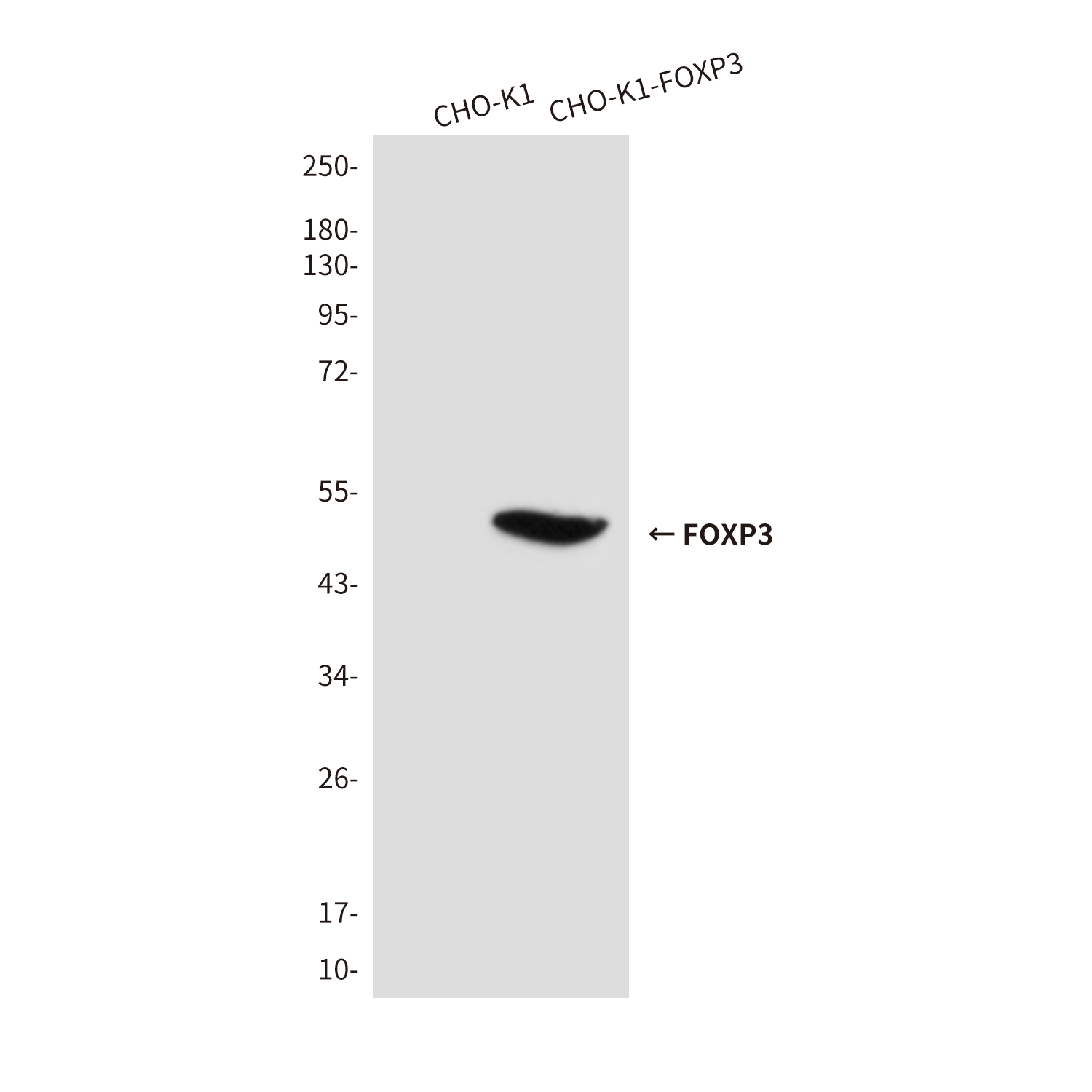
| Name | FOXP3 Mouse (7H9) mAb |
|---|---|
| Accession (Primary) | Q9BZS1 |
| Host Species | Mouse |
| Clonality | Monoclonal |
| Isotype | IgG1 |
| Species Reactivity | |
| Reacts With | Human, Mouse, Rat |
| Calculated MW | |
| Calculated MW: 47 kDa; Observed MW: 47 kDa | |
| Buffer System | |
| Liquid in PBS containing 50% glycerol, 0.5% BSA and 0.02% sodium azide, pH 7.3. | |
| Storage | |
| Store at 4°C short term. Aliquot and store at -20°C long term. Avoid freeze/thaw cycles. | |
| Recommended Dilution | |
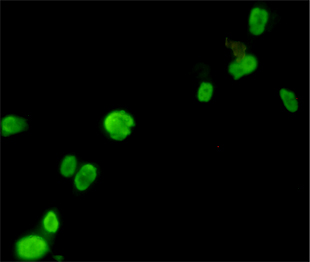
| WB-1:500-1:1000; IF-1:50-1:200 | |
| Purification | |
| Affinity Purified | |
| Conjugation | |
| Unconjugated | |
| Modification | |
| Unmodified | |
| Form | |
| Liquid | |
| Background | |
| FOXP3 (Forkhead box protein 3) is a member of the forkhead/winged-helix family of transcriptional regulators, highly conserved across mammals, and essential for normal immune homeostasis. FOXP3 is 381 amino acids long, stably and constitutively expressed at a high level in CD25 + CD4 positive regulatory T cells, a low level in CD4-positive/CD25-negative cells, and is absent in CD4-negative/CD8-positive T cells. FOXP3 may be a master regulatory gene, and a more specific marker of regulatory T cells. Defects in the gene encoding FOXP3 protein cause the scurfy phenotype in mice. In humans FOXP3 defects play a role in IPEX syndrome (immune dysfunction, polyendocrinopathy, enteropathy, X-linked syndrome), also known as X-linked autoimmunity-allergic dysregulation (XLAAD) syndrome. Transcript variants of FOXP3 encoding different isoforms have been identified. In human breast and colon cancer cells, expression of FOXP3 is regulated by p53 in response to the DNA damage. | |
Target Information: ( Q9BZS1 ) | |
| Name | FOXP3 |
| Gene ID | 50943 |
| Other Names | |
| JM2; AIID; IPEX; PIDX; XPID; DIETER | |

Thousands of laboratories across the world have published research that depended on the performance of antibodies from ADMEbio to advance their research.
Check out links to articles that cite our products in major peer-reviewed journals, organized by research category.
Thank you,
ADMEbio Team


ADMEbio welcomes feedback from our customers.
Thank you,
ADMEbio Team



