Hello, Sign in
My Account
My Account
New customer? Start here


| Catalog # | Availability | Size | Quantity | Unit Price | Save For Later Wish List | |
|---|---|---|---|---|---|---|
| ABZ3921-100 | 2 weeks | 100 µL | $499.00 |
Select product before adding to cart
|
||
| ABZ3921-20 | 2 weeks | 20 µL | $149.00 |
Product Overview | |
| Name | Smad2/3 (6F7) Mouse mAb |
|---|---|
| Accession (Primary) | P84022 |
| Host Species | Mouse |
| Clonality | Monoclonal |
| Isotype | IgG |
| Species Reactivity | |
| Reacts With | Human, Mouse, Rat |
| Calculated MW | |
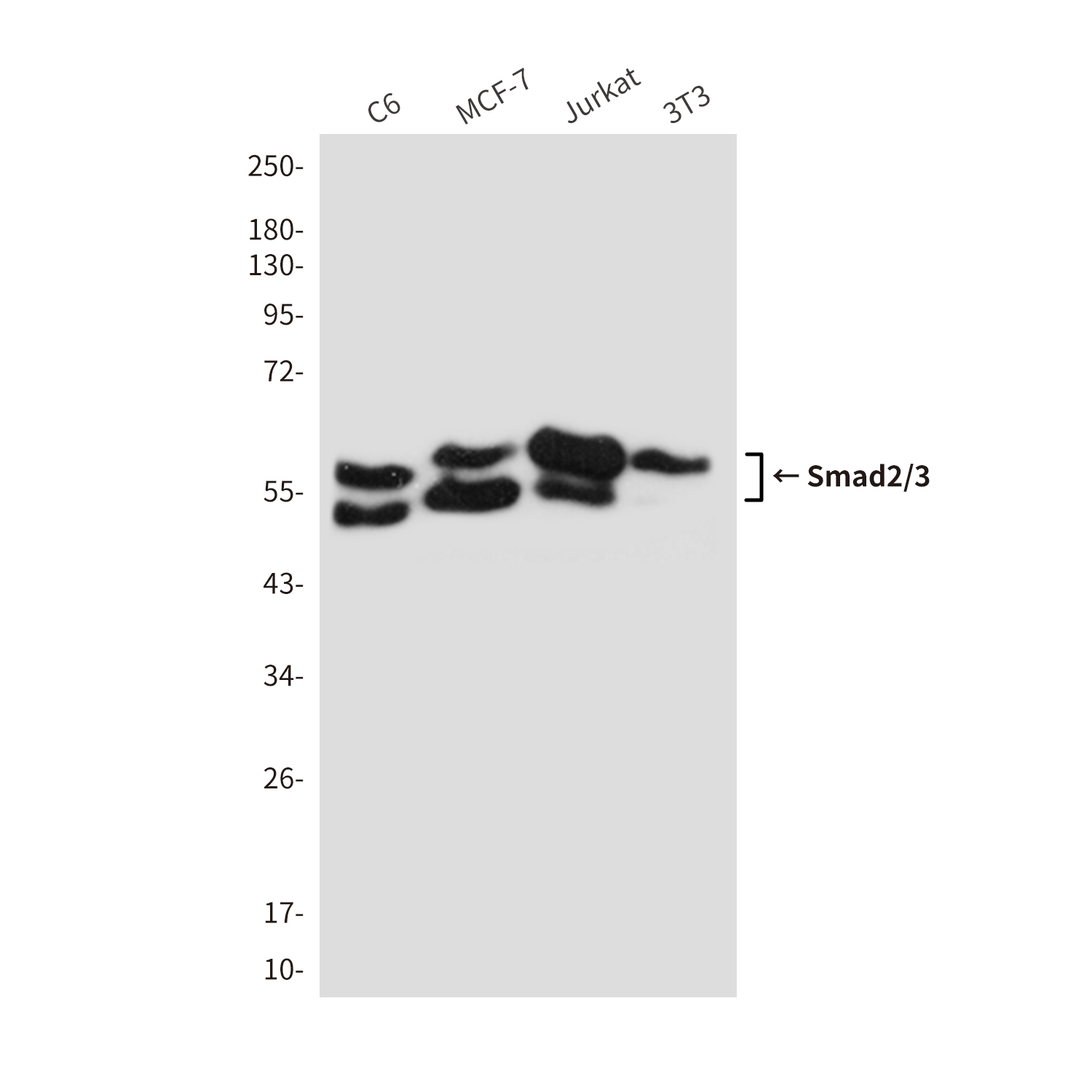
| Calculated MW: 52 kDa; Observed MW: 52,60 kDa | |
| Buffer System | |
| Liquid in PBS containing 50% glycerol, 0.5% BSA and 0.02% sodium azide, pH 7.3. | |
| Storage | |
| Store at 4°C short term. Aliquot and store at -20°C long term. Avoid freeze/thaw cycles. | |
| Recommended Dilution | |
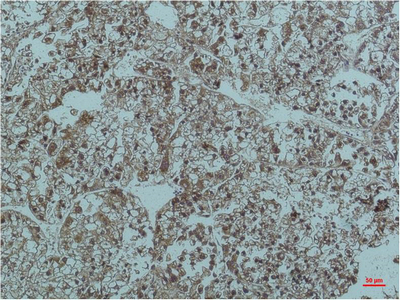
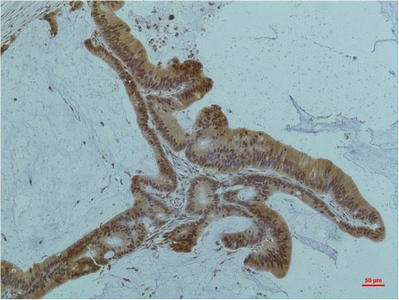
| WB-1:500-1:1000; IHC-1:50-1:100 | |
| Purification | |
| Affinity Purified | |
| Conjugation | |
| Unconjugated | |
| Modification | |
| Unmodified | |
| Form | |
| Liquid | |
| Background | |
| Members of the Smad family of signal transduction molecules are components of a critical intracellular pathway that transmit TGF-β signals from the cell surface into the nucleus. Three distinct classes of Smads have been defined: the receptor-regulated Smads (R-Smads), which include Smad1, 2, 3, 5, and 8; the common-mediator Smad (co-Smad), Smad4; and the antagonistic or inhibitory Smads (I-Smads), Smad6 and 7 . Activated type I receptors associate with specific R-Smads and phosphorylate them on a conserved carboxy terminal SSXS motif. The phosphorylated R-Smad dissociates from the receptor and forms a heteromeric complex with the co-Smad (Smad4), allowing translocation of the complex to the nucleus. Once in the nucleus, Smads can target a variety of DNA binding proteins to regulate transcriptional responses . | |
Target Information: ( P84022 ) | |
| Name | SMAD3/SMAD2 |
| Gene ID | 4087/4088 |
| Other Names | |
| SMAD2; MADH2; MADR2; MAD homolog 2; M hMAD-2; SMAD family member 2; SMAD 2; Smad2; hSMAD2; SMAD3; MADH3; hMAD-3; JV15-2; SMAD family member 3; SMAD 3; Smad3; hSMAD3; smad2/3; smad2+3 | |

Thousands of laboratories across the world have published research that depended on the performance of antibodies from ADMEbio to advance their research.
Check out links to articles that cite our products in major peer-reviewed journals, organized by research category.
Thank you,
ADMEbio Team

ADMEbio welcomes feedback from our customers.
Thank you,
ADMEbio Team